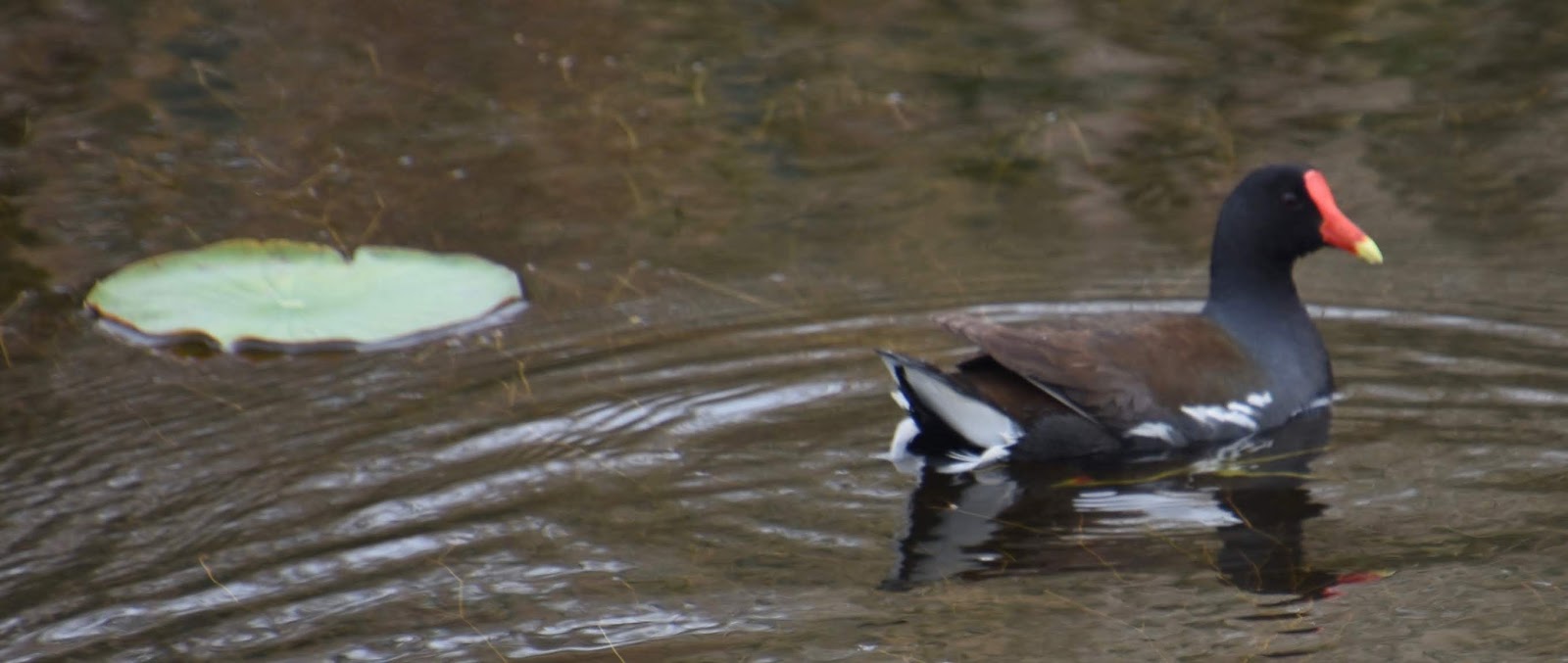
The drive across Texas from Louisiana was most pleasant. We generally avoided the major highways, and gave cities a wide berth. Lots of the verges were well populated with wildflowers. The Texas Bluebonnet was the most common, as is proper for the official State Flower, but there were plenty of other species.
As we drove Westward the scenery gradually changed to the arid land we associate with Western movies. We joked about the lack of stagecoaches in the valleys and the absence of Indians riding up to the skyline and giving their position away. Then, on a hilltop in the distance we saw a line of figures. Apaches? No, they were wind turbines a long way off.
Big Bend National Park had been recommended by an actual Texan we met at the Bayou Segnette State Park campground in New Orleans. It was a splendid tip. The mistake we made was in moving on too quickly, but we were concerned about how much more of the West there was to see in the 90 days allowed by our visas.
We spent a night in the Walmart parking lot in Fort Stockton. In the morning we went to fill up with Walmart's competitively priced gasoline but something was wrong with the till and it wouldn't accept our plastic money. “Too bad for Walmart”, we thought. There are other gas stations in Fort Stockton although we may have to pay 5c more per gallon. Our GPS smoothly navigated us to US-385 towards Marathon completely avoiding fuel opportunities. We didn't pass another gas station until we arrived in Marathon, where the monopolist fuel supplier charged 50c per gallon more than Walmart. Curses.

Our first Pronghorn Antelope. Like most of those seen subsequently, this one is on farmland behind a fence. We are told that they migrate long distances and conclude that the fences must be to keep cattle and other domestic animals in because they do not keep wild deer and antelope out.
At Big Bend we were greeted with a sign that said all the campgrounds in the park were full. Oh no. But the ranger who inspected our annual pass reassured us that there were private campgrounds just outside the park. One, near the North entrance “never seems to fill up” and there were several near the West entrance where he was sure we would find a site easily. We advanced to inspect the wonders of Big Bend National Park.
Why is the park so busy in early April? It's not holiday time. Children are all at school. We identified two reasons:
- The climate is very pleasant in April. In July and August it gets very hot.
- In Spring the desert blooms. Forget parched, arid, lifeless landscapes. The desert plants do have a harsh life, but after a little moisture in the Spring they put their energy into creating the next generation and produce their flowers. Sometimes abundantly and often beautifully.
The general scenery of the Chihuahuan Desert is dry and not very colourful at long range:
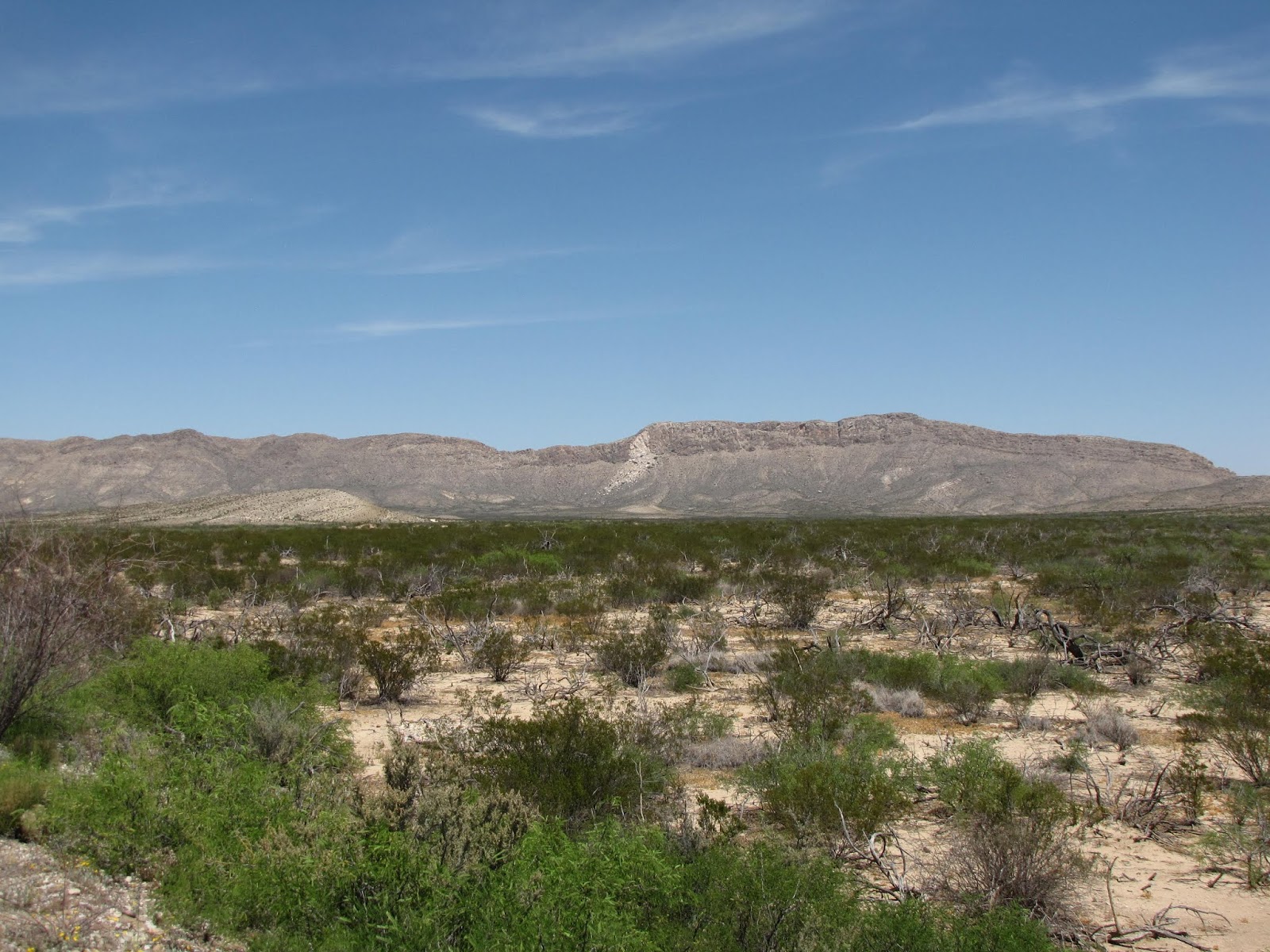


The Giant Dagger Yucca is the dominant member of its family in the area.


A particularly fine flower head.
A selection of flowers:


Some sort of poppy.


A daisy

Lupins


Texas Bluebonnets
The most fascinating for us were the spiny plants and their blossoms:


No, we didn't try to pick one. Isn't that a gorgeous colour?

There were prickly pear cacti all over the place.

This one has buds.

They open into yellow flowers, but not all at the same time.

Aren't they lovely?

This clump may be one plant or several.
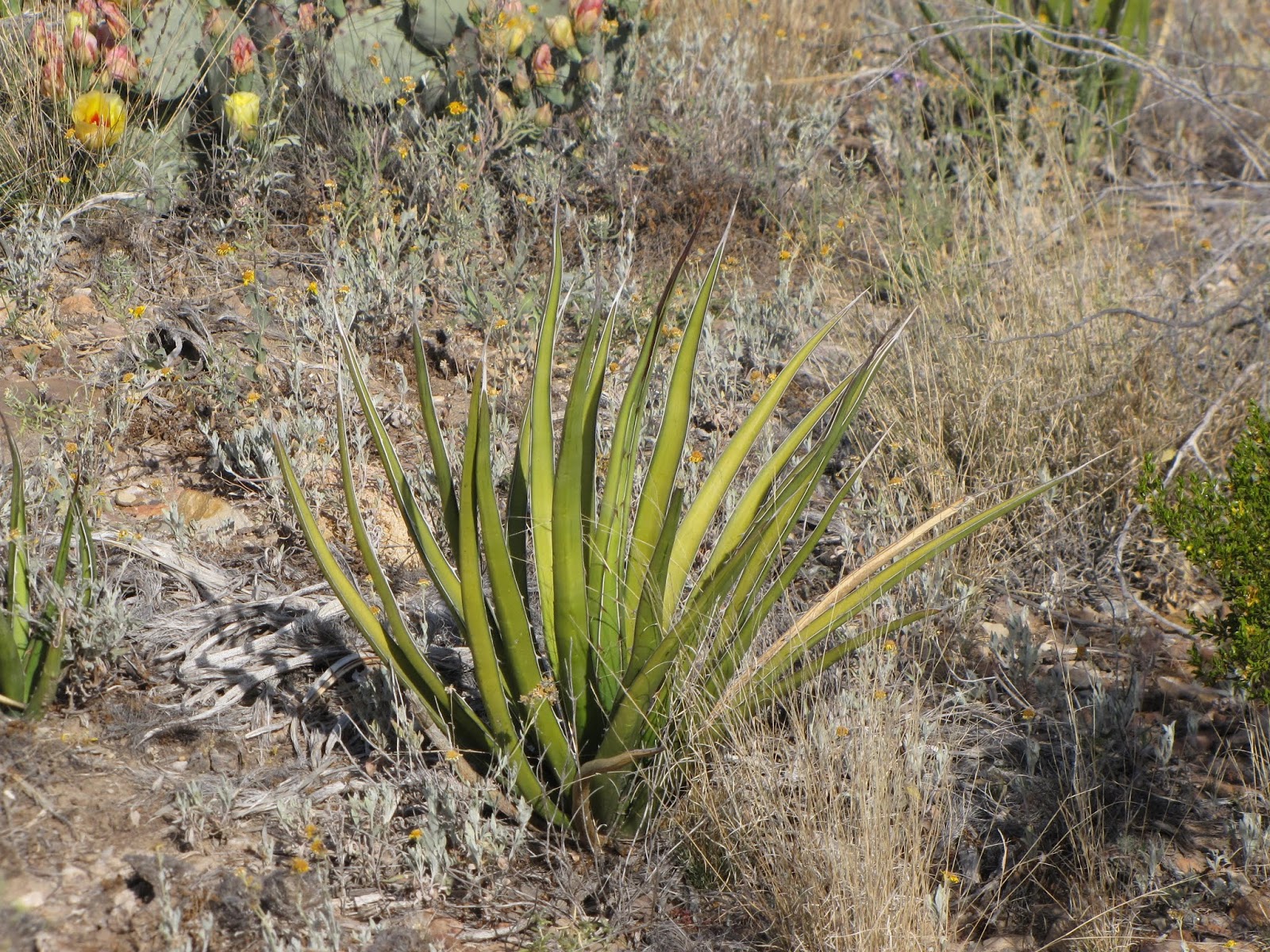
A species of aloe.
The 'plates' of the prickly pears are edible. Many of them had been attacked by insects, and apparently the javelinas (wild pigs) eat them spines and all. The ones we saw in supermarkets had the spines removed. They may have been grown commercially. We didn't have any cooking instructions so we didn't buy any.
A particularly vicious botanical specimen is known as Ocotillo or the “Buggy Whip”.

It has long, thin stems …

... covered with spines.

The flowers are clusters of small red blooms …

... that were attracting lots of attention from bees.

Can you see the bee flying away in this picture?
This was the first time we had seen desert country with information boards. There was so much to try and take in.
The park includes the entire Chisos mountain range. We saw them, but the only access road was not recommended for vehicles over 24 feet long, even though it is paved. Nor were we game to take Gregory, our motor home, on the unpaved roads. The “improved” dirt roads were described as accessible for most vehicles, but all drivers were advised to inquire about current conditions before venturing out along one of these roads. The “primitive” dirt roads were strictly for high clearance 4WD vehicles.
However, there were plenty of miles of safe, paved roads. Some of them were described on the park map as scenic drives, but really the whole park is scenic.
We elected to look for a camping spot outside the West entrance. The first option was the Study (pronounced “Stoody”) Butte (properly pronounced “Beaut” as you probably know, but which we always want to say as “Butty”) RV Park. All the regular sites were full, but we were offered dry camping (no connections to power, etc.) for only $25 per night. Cash. There were hot showers. “Find yourselves a spot. How about over there by the washing line?”
You don't see many washing lines in America. Nearly everyone uses an electric dryer. This was a rotary clothes line that had seen better days. Much better days. Probably more than half of the lines were broken and dangling forlornly. All strands were well coated with dust.
The manageress was a great talker and excused the campground's imperfections by pointing out that she and her husband were hosting for the season, and not the owners. Somehow the conversation got around to beer and she was fascinated that Bill brews his own beer in New Zealand. He did his best to describe home brewing using a kit. “Where can I get one?” It didn't look as though Study Butte's only store was a source of brewing supplies. We suggested that kits might be sold online.
Big Bend NP claims an impressive birding list, mostly as birds migrate between Mexico and more temperate breeding grounds. We were told that the area near the Rio Grande Information Center was the best place to go birding.
In terms of number of species it was rather disappointing. The Spring migration must have already moved on. But we did see some birds and other wildlife.

There were Turkey Vultures patrolling hopefully above the river.

At one point our path was high enough to see this vulture side-on.

This one passed close overhead. This picture has not been cropped – the vulture was close enough to fill the frame.

Some ponds had been dug for an attempt at cultivation in pre-national park days. These trees are probably another legacy of that time.
From the rushes by a pond came an extraordinary noise. It was deep, something between a bassoon and an off-key french horn. The ranger at the information center had no idea what it could be. A large frog, maybe?

A turtle sunning itself.

A damsel fly.

A beautifully camouflaged cricket.

The best known desert bird – a Roadrunner. It's a member of the cuckoo family, but the experts say that it makes its own nest. They do not go “Beep beep”.
We are always keen to see wildlife and that includes snakes. There is a proviso - that the snake cannot get at us. In Big Bend two snakes showed themselves. In both cases we were driving at the time and have no photographs to corroborate this.
The first was disguised as a road marking. Some road repairs leave black lines of fresh tar on the surface. As we passed over one such area one of the tar streaks started to wiggle vigorously. Either Bill experienced an unprecedented optical illusion or it was a thin, black snake.
Various signs around the park warn the visitor against rattlesnakes, and others tease you with stories of pink snakes. I ask you! But we saw one. It was large and very pink. We both saw it. It is called a Red Racer. They are not venomous, but one description we found warned that they are very bad tempered. We didn't stop to pick it up.

The Rio Grande. That's Mexico on the other side.

The river flows through these hills. Can you see where? We couldn't for a long time.

Inside the Boquillas Canyon, whose opening is in the previous picture. It's true, the river flows right through.
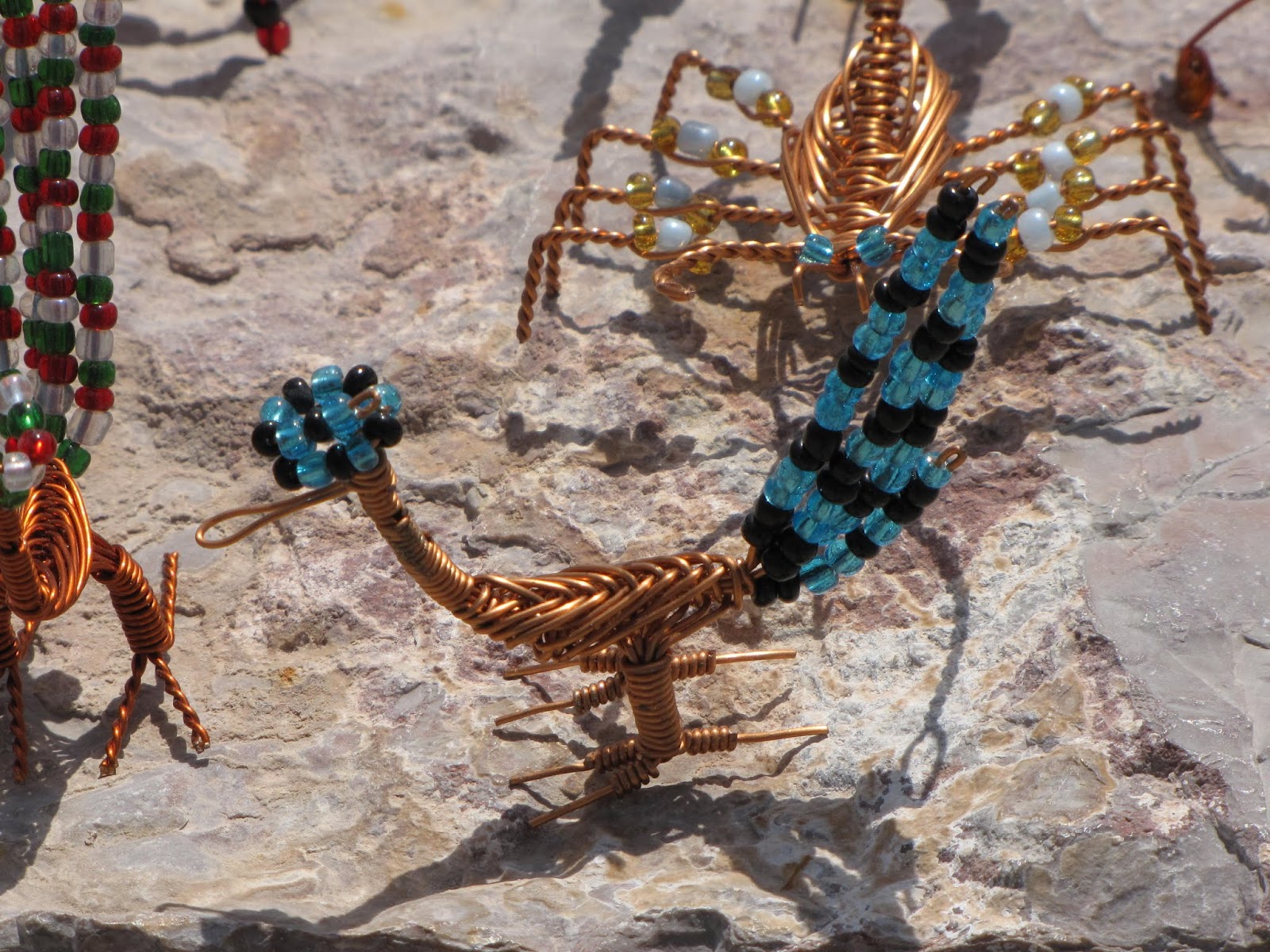
Along the trail to the Boquillas Canyon were some souvenir stalls. These wire and bead models – this one is a roadrunner – caught our eye. So much so that Eve actually bought one.
We learned too late about the trips to Mexico. If you have $5 and your passport with you it is possible to go through customs formalities at Boquillas Crossing and be rowed across the river to officially visit Mexico.
It is even easier to unofficially cross the border. The river isn't wide and it is an easy swim. We promised not to say that we saw any folk doing this.

We returned to Study Butte for another night by the clothes line. Sunset that evening was spectacular.